Resource Guarding in Puppies & Dogs: Prevention, Management, and Myth-Busting
Understanding Resource Guarding: Why Dogs Protect Valuables
Resource guarding—where a puppy or dog stiffens, growls, blocks, or snaps when someone approaches their food bowl, bone, stolen item, or favorite resting spot—is a completely natural canine survival instinct. In the wild, a wolf or wild dog that willingly let others snatch their food or shelter wouldn't survive long! While natural, in a human home it can become dangerous if handled incorrectly.
Debunking the Dangerous Myth: "Put Your Hands in Their Bowl & Take Food Away"
For decades, outdated advice told owners to constantly stick their hands into their puppy's food bowl or snatch food away while they were eating to "teach them who is boss" or "prove dominance".
This advice actually CAUSES resource guarding! Imagine sitting at a restaurant enjoying a steak, and your friend repeatedly reaches over, sticks their fingers in your plate, and takes your food away. You would naturally become defensive, hover over your plate, eat faster, or tell them to back off! When you constantly disturb a puppy while eating, you teach them that human hands approaching their bowl equal loss, threat, and anxiety.
The Golden Rule: Always Add Value!
To build a dog who loves human hands approaching their food or possessions, hands must always represent BONUSES and ADDED VALUE, never loss!
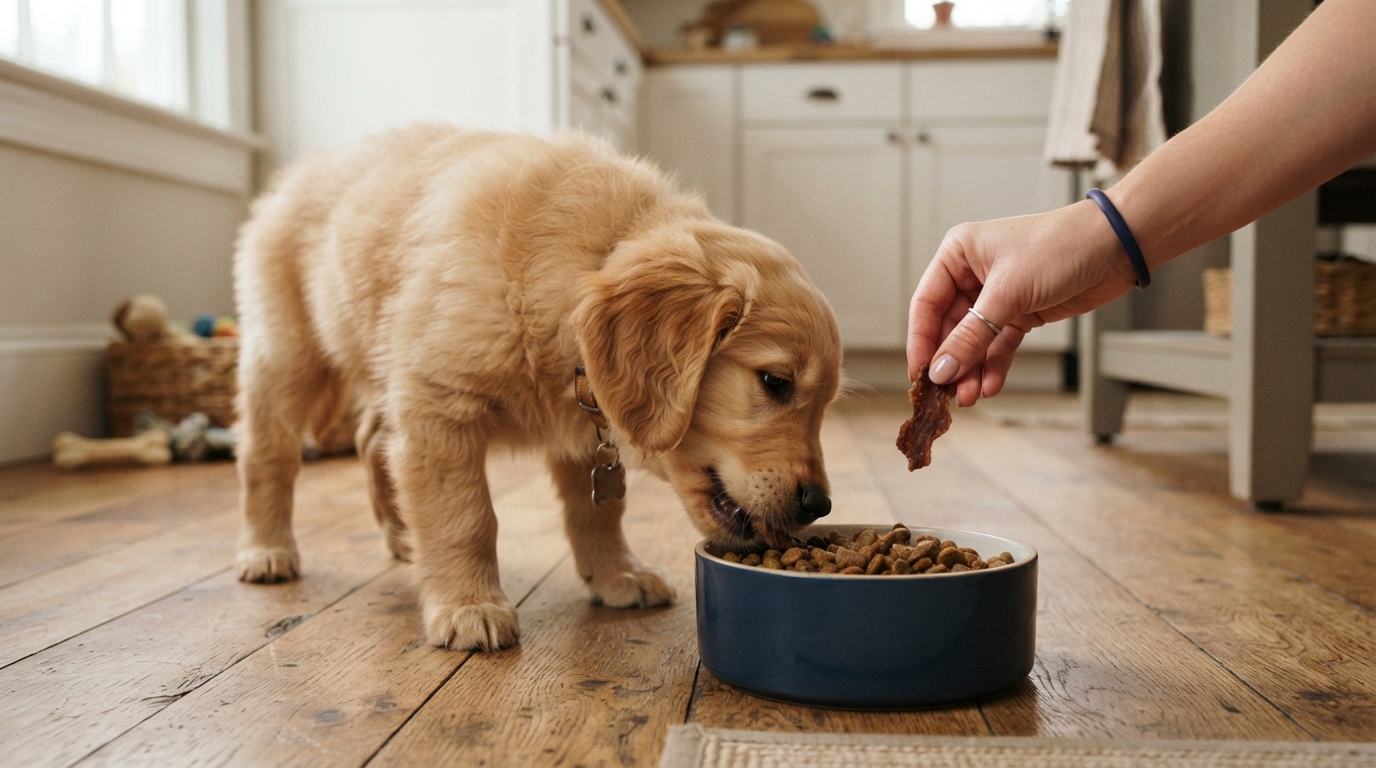
- The Addition Game during Mealtime: While your puppy is eating their kibble from their bowl, walk past casually and toss a piece of high-value roast chicken, cheese, or hot dog straight into their bowl, then keep walking.
- Change Their Emotional State: Over a few weeks, your puppy stops thinking "Oh no, here comes a hand to steal my food!" and starts thinking "Hooray! A human hand is coming over, which means something even more delicious is about to land in my bowl!"
Teaching the "Drop & Swap" Trade Skill
When your puppy has a chew, toy, or stolen item, never chase them or forcefully pry open their jaws (unless it's an immediate life-threatening emergency like poison or glass). Prying jowls breeds distrust and rapid guarding.
- Practice Low-Value Swaps: Give your puppy a low-value chew or rubber toy. Approach with a piece of high-value liver or chicken.
- Say "Swap!": Hold the high-value treat right in front of their nose. As they release the chew to take the delicious treat, mark "YES!" or "GOOD!", give them the treat, and then give them their original toy right back!
- Build Trust: When puppies learn that dropping an item doesn't mean losing it forever, they willingly drop anything without anxiety.
Proactive Management Strategies
Management is 80% of solving or preventing resource guarding. Prevent practicing guarding behaviors by controlling the environment:
- Peaceful Meal Zones: Feed your puppy in a quiet, low-traffic area (or inside an open crate/behind a baby gate) where children, other pets, or busy family members won't walk past or disturb them.
- Using House Leads for Sofas & Food Stealing: If your puppy or teenager guards the sofa or steals food off counters, keep a light 1-2 metre puppy trailing line attached to their harness indoors. Instead of reaching over them or grabbing their collar (which triggers a growl/snap), calmly pick up the end of the line and lead them off the sofa or away from the kitchen counter without any confrontation!
- Baby Gates: Use baby gates to section off areas so children never wander into a sleeping or eating dog's space.
Genetic & Breed Predispositions to Resource Guarding
While any dog of any breed can guard resources, genetics play a significant role in how quickly or intensely guarding tendencies manifest:
- Gundogs (Cocker Spaniels, Springer Spaniels, Labradors, Golden Retrievers): Bred to hold and retrieve items soft-mouthed in their jaws for long periods. They often love holding items in their mouth and can easily develop item-guarding if chased for socks, shoes, or tissues!
- Herding & Pastoral Breeds (Border Collies, German Shepherds): Highly observant, environmental controllers who react quickly to movement near their space or items.
- Terriers & Working Breeds: High tenacity and possessiveness over high-value prey or chews.
Regardless of breed, starting early with the "Always Add Value" rule and force-free swap games creates a safe, relaxed, trust-filled home environment for life!
Are you looking for puppy training In Solihull?
If so, book a free call and lets chat.
Book a free call