
The Witching Hour: Why Won't My Puppy Settle in the Evening?
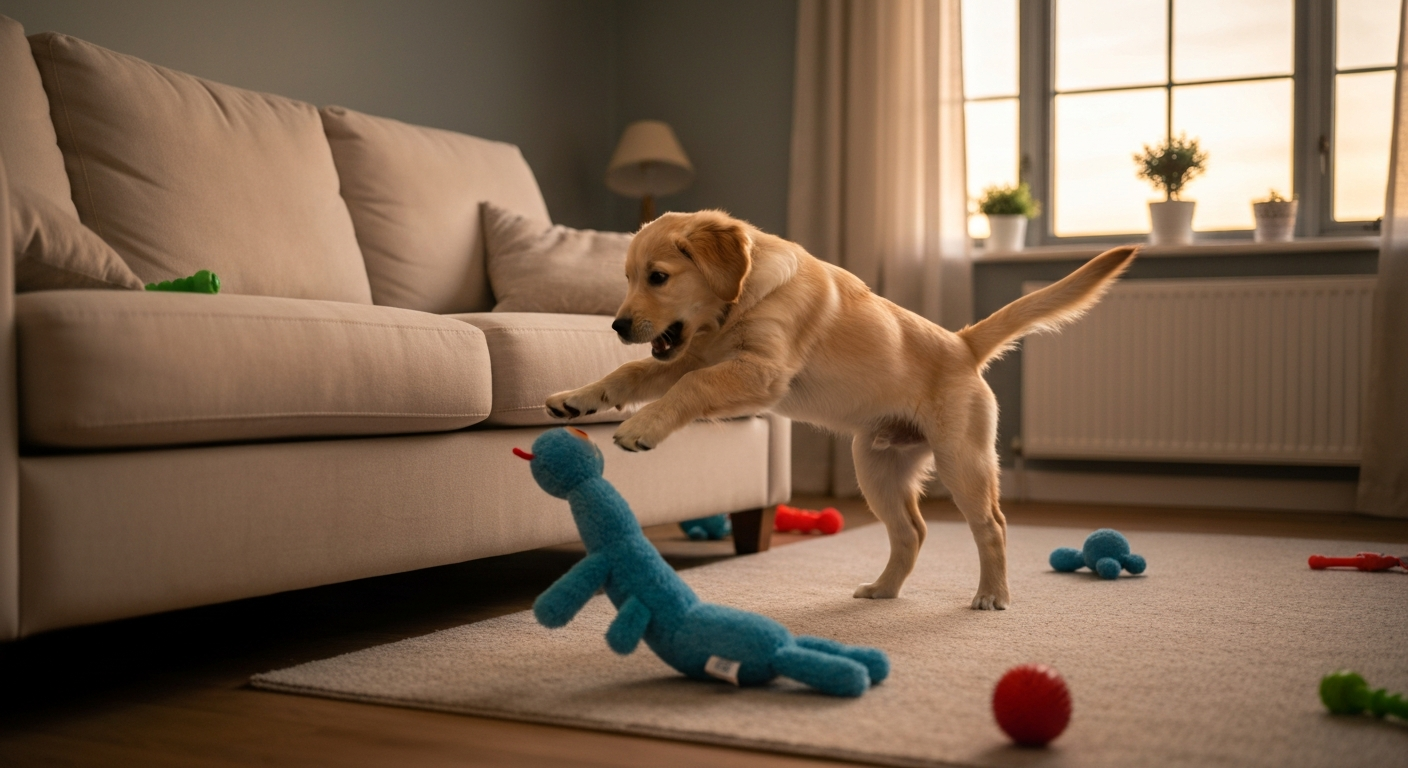
You've worked a long day, cooked dinner, and finally sit down on the sofa with a cup of tea, expecting a peaceful evening. Suddenly, at 7 PM, a switch flips! Your puppy starts sprinting across sofas, barking frantically, zooming around the rug, and chomping on your ankles like a tiny wild animal.
Welcome to The Witching Hour!
Why Does the Evening Chaos Happen?
If you're Googling "Why won't my puppy settle in the evening?", rest assured you are experiencing what 95% of puppy owners go through. The assumption is usually: "They have too much energy, I need to exercise them more!"
In reality, the exact opposite is true: your puppy is severely overtired and over-stimulated!
By evening, a puppy's developing brain has absorbed hours of sensory input, learning, and sights. Just like a tired toddler who throws a crying tantrum instead of going to bed, an overtired puppy loses all impulse control and cannot switch off independently.
5 Steps to Conquer the Evening Witching Hour
1. Enforced Crate or Pen Nap
When the zoomies strike, gently pick up your puppy and place them in their quiet crate or playpen with a dark blanket draped over it. Within 3 to 5 minutes of quiet resting, 90% of zoomie puppies will fall into a deep, sound sleep.
2. Scatter Feeding & Sniffing Games
Sniffing lowers a dog's heart rate and releases calming neurotransmitters. Ditch the food bowl for dinner—scatter their kibble across a snuffle mat, rolled-up towel, or across the garden grass for a 15-minute calming search game.
3. Provide Licking & Chewing Outlets
Licking releases happy endorphins that naturally reduce cortisol. Offer a frozen Lickimat spread with Greek yogurt or a safe natural chew (like a pizzle stick or yak bar) while you relax on the sofa.
4. Dim the Living Room Lights
Lower household arousal levels by turning down the TV volume, dimming overhead lights, closing blinds, and stopping all energetic rough play after 6:30 PM.
5. Teach Calmness — Don't Expect It
Calmness is a trained skill that must be actively taught and reinforced—puppies aren't born knowing how to relax quietly in a busy household. Don't expect your puppy to automatically switch off without guidance. Practice capturing calm moments throughout the day: quietly place a kibble or treat between their paws whenever you catch them lying down relaxed. Pair a dedicated settle mat with long-lasting chews so they learn that offering calm behaviour is the best way to earn rewards and affection.
Are you looking for puppy training In Solihull?
If so, book a free call and lets chat.
Book a free call