
The Ultimate Puppy Socialisation Guide: Building Neutrality
Socialisation isn't about your puppy meeting 100 dogs. It's about teaching them that the world is a safe, predictable, and ultimately boring place. This is the definitive guide for Solihull puppy owners.
What is Socialisation?
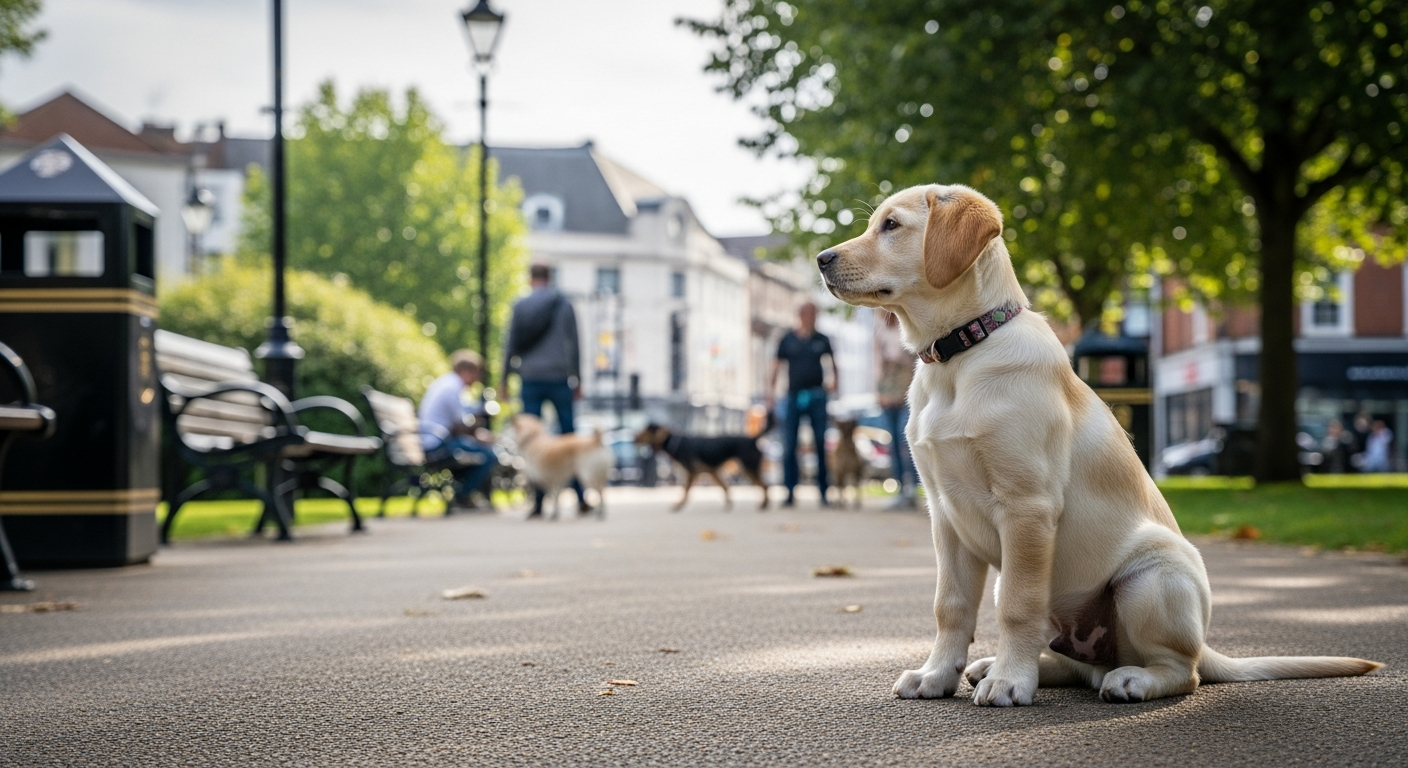
People have this false impression that socialisation means meeting every dog and every person they see, but this can lead to problems later on. What socialisation actually is, is letting your puppy see, watch, smell and hear the world around them, at their pace and with the support of a trusted person.
Socialisation
The living part of the human world such as people, other animals, other dogs.
Habituation
The non-living part of the human world such as sights, sounds, smells (i.e., washing machines, traffic, firework sounds).
If you take one thing away from this guide, let it be this: Socialisation is not socialising. We don't want them to think every dog they see is a playmate, and we don't want them to think every person is a best friend. We want neutrality.
When Should You Start?
The critical period of socialisation is between 3 & 14 weeks of age (though the general window extends to 16 weeks). This is when puppy's brains are like sponges and will absorb lots of sensory information from the world around them.
Extra care should be taken when the puppy is between 8 to 10 weeks of age as this can be a particularly sensitive period for them and can have lasting effects on their personalities and ability to cope in fearful situations.
Depending on how good the breeder is, habituation should start from as early as 0-3 weeks of age. One of the first senses to develop for a puppy is smell so puppies should be gently exposed to different smells to start getting them used to their future environments. From 3 weeks old, the puppies should then be introduced to different household sounds such as washing machines, hoovers, dishwashers etc.
Before Vaccinations?
Always follow your Vets advice but my recommendation is to start taking your puppy out as soon as possible. This can be in a carrier or in your arms (If they aren't vaccinated) and let them watch, listen and sniff the air. They will gain so much important information from this.
Quality Over Quantity
One calm, positive experience where your puppy feels safe is worth more than 50 overwhelming ones. If your puppy is hiding or shaking, you're doing too much.
Top Tips for Success
1. Early Exposure
Expose your puppy to lots of different sights, sounds and smells as early as possible. Give your puppy time to investigate at their pace. Start off in quieter environments, then build up to busier environments. Look to expose your puppy to each environment 3 times, starting at a good distance away from anything scary, then as they get used to it, decrease the distance.
2. Use Positive Reinforcement
Use treats and toys to make the situation positive and repeat their exposure to the scary thing over a few days. Some puppies may even find going outside of the house scary. If this is the case, start in your porch or even sitting in your car with the windows down. Play is an awesome way to socialise your puppy, without the environment being the sole focus. Utilise food chews and lickimats to build positive associations, whilst building confidence.
3. Stay Calm and Confident
Stay calm. If you are calm and relaxed, your puppy will be more likely to be calm and relaxed. Emotions travel through the lead in both directions. If your puppy is scared, comfort them but don't make a big deal out of it, even laugh it off. We don't want to confirm to our puppies that they are right to be scared about that object or environment.
4. Sounds of the World
Spotify and any other music platform has lots of puppy desensitisation sounds, so you can start to introduce your puppy to these sounds before exposing them to the thing that is making the sound. Have it on in the background all day every day. Start off on low volume, then gradually increase to the volume until you reach what it would be in real life.
Real-World Solihull Socialisation Spots
Solihull offers a variety of environments that are perfect for building neutrality. Here are my top recommendations for different stages of training:
1. The Quiet Park Bench
Brueton Park or Malvern Park are great, but don't go to the dog-heavy areas. Sit on a quiet bench near the entrance and let your pup watch from a distance. Reward them for simply looking at things without reacting.
2. The Garden Centre
Notcutts or Melbicks are brilliant. They have different floor surfaces (gravel, tile, wood), strange objects (statues, fountains), and varied noises. They are almost always dog-friendly and offer a controlled environment.
3. The Train Station
Solihull station is perfect for desensitising to loud, sudden noises. You don't even need to go in—just standing near the entrance provides plenty of sensory input like brakes hissing and crowds moving.
4. The Café Patio
Choose a dog-friendly spot with outdoor seating. Keep your pup on a mat and reward them for just 'being'. This is the first step to having a dog that can settle anywhere.
Local Tip: Dog Friendly Solihull
Want the full list of where you can take your pup? Check out my blog post on Dog Friendly Shops and Cafes in Solihull.
How to Spot Over-stimulation
A common mistake is thinking "more is better." If your puppy starts biting more, jumping up, barking excessively, or can't seem to listen, they are likely over-stimulated. Their brain is full!
When this happens, the best thing you can do is remove them from the situation. Go back to the car, find a quiet corner, or head home. Socialisation is about positive experiences, not just experiences.
The Paws Intuition Socialisation Checklist
Socialisation Goals by Age
8-12 Weeks: The Foundation
Focus: Building trust with you and exposure to household sights/sounds. Short, carried trips outside.
12-16 Weeks: The Expansion
Focus: Walking on different surfaces, visiting quiet parks, practicing neutrality around other dogs from a distance, and starting to visit busier spots to gradually build confidence.
4-6 Months: Proofing Neutrality
Focus: Continuing in busier spots like Solihull town centre, settling in cafes, and ignoring higher distractions.
Further Reading & Local Tips
Want to build an 'Anywhere Dog'?
Socialisation is my specialty. Join my Puppy Club in Solihull and we'll build your puppy's confidence together in a safe, controlled environment.
Book a free call and let's chat