
New Puppy Survival Guide: The First Month Road-Map
The first 30 days are a whirlwind of cuteness and chaos. This is your definitive roadmap to surviving and thriving during your puppy's first month in Solihull.
Reality Check: It's Going to Be Hard (And That's Okay)
First, let's lower the pressure. You've just brought a tiny, primitive creature into your Solihull home. They don't speak your language, they don't know the rules, and they've just lost everything they've ever known.
The "puppy blues" are a real thing. If you feel overwhelmed, exhausted, or even a bit regretful in the first week, please know that you are not alone. This guide is here to help you navigate the practicalities so you can focus on building that bond.
1. Puppy Proofing Your Home
Nobody wants their precious home destroyed by a mini shark, that's why it's essential to shark-proof your home. Once you've puppy proofed, go back and do it again...and again.
Prepare & Make Safe
Tidy away loose cables, ornaments, and breakables. Lock away dangerous lotions & potions. Ensure open fires, ponds, or hot tubs are covered, and remove toxic plants.
Remove Temptation
Install baby gates to prevent access to no-go areas. Use shoe storage racks, roll up rugs, and set up pens or crates to create a safe space for your pup.
Read more: Puppy Proofing Your Home: The Ultimate Guide.
2. Bringing Home Your Puppy
The journey home and the first few hours set the tone for your puppy's new life. Keep things calm, quiet, and positive. Avoid inviting the whole family over on day one—give your puppy time to decompress.
The Car Ride
Have someone sit in the back with the puppy to comfort them. Use a secure carrier or seatbelt harness. Don't feed them a large meal right before the journey to avoid car sickness.
The Arrival
Before going inside, take your puppy to their designated toilet area in the garden. Let them sniff and explore at their own pace. Praise calmly if they go to the toilet!
Read more: Bringing Home a Puppy for the First Time.
3. Surviving Night One
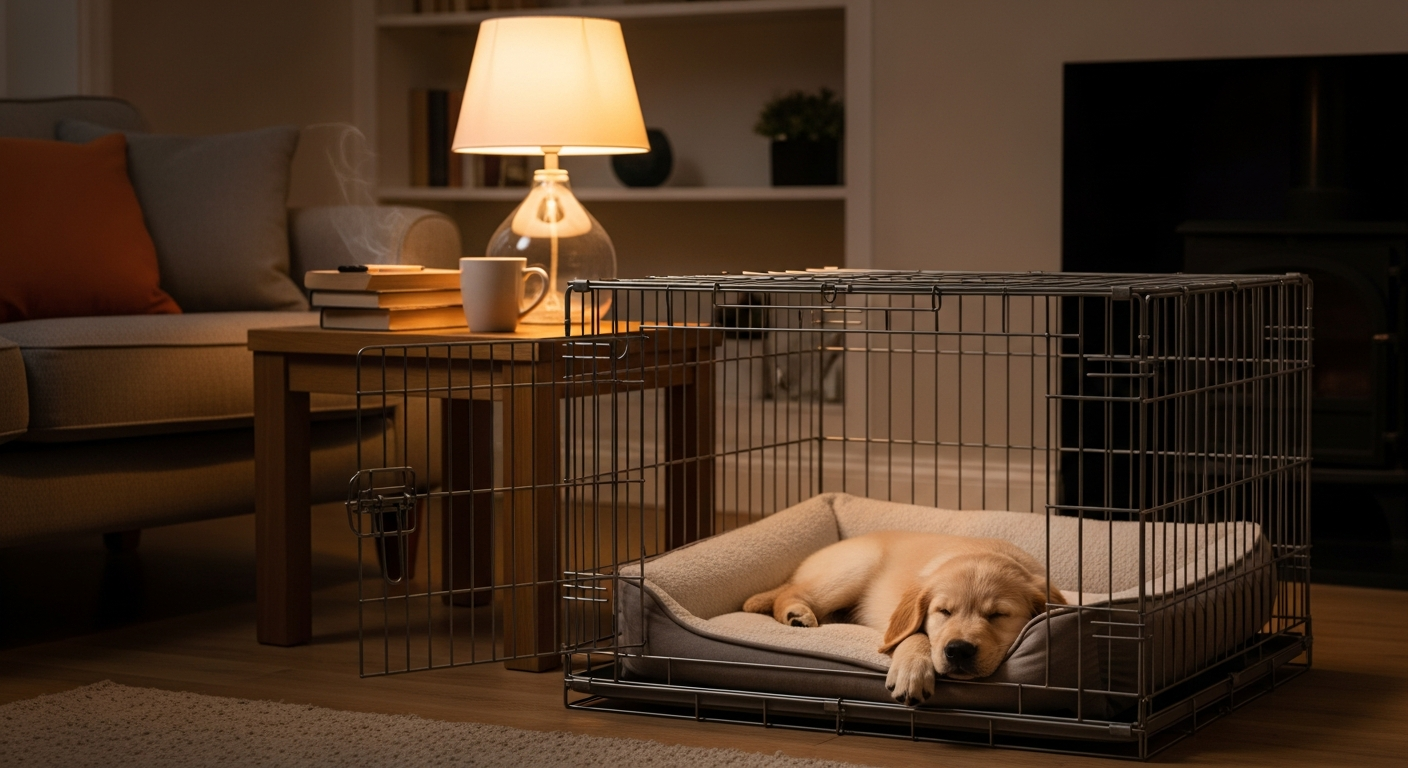
The first night is usually the hardest. Your puppy is scared and lonely. I always recommend having them close to you initially—either in a crate next to your bed or with you on the sofa.
Should you let them "cry it out"?
In short: No. Ignoring a panicked puppy doesn't teach independence; it teaches them that they aren't safe. Comforting them won't "spoil" them—it will build the trust they need to feel confident being alone later on.
Nighttime Toilet Trips
Set an alarm to take them out every 2-3 hours. Keep it boring—no play, low lights, no excited talking. Just out, toilet, praise quietly, and straight back to bed.
Read the full first-night guide: Night One: A Survival Guide.
4. The Power of a Schedule
Puppies thrive on predictability. A solid schedule helps with toilet training, settling, and reducing overall anxiety.
Puppy Schedule by Age
An 8-week-old puppy needs a very different rhythm to a 16-week-old. Focus on: Wake-Up, Toilet, Eat, Toilet, Play/Train, Toilet, Nap. Repeat!
Enforced Rest
Most puppies don't know how to switch off. If they've been awake for an hour, they likely need a 1.5 to 2-hour nap. Don't wait for them to fall asleep—help them by putting them in their safe space.
Need a template? My First Week Schedule & Tips.
5. Toilet Training Basics
Toilet training is about management, not punishment. Your puppy doesn't know the rules yet, and they have very little bladder control.
The Golden Rules of Toilet Training
Take them out frequently
After sleeping, after eating, after playing, and every 45-60 minutes when awake.
Reward heavily
When they go outside, praise them calmly and give them a high-value treat immediately.
Never punish accidents
If they go inside, just clean it up silently with an enzymatic cleaner. Punishing them will only make them hide from you to go to the toilet.
6. Managing Puppy Biting
Puppy biting is completely normal. They explore the world with their mouths, and they are teething. It hurts, but they aren't being aggressive.
Redirection
Always have a toy ready. When they go for your hands or ankles, redirect them to the toy. Make the toy more exciting than you!
Reverse Time-Outs
If they bite hard, the game stops. Say "Ouch", stand up, and walk away for 30 seconds. They quickly learn that biting ends the fun.
Read the complete guide: The Ultimate Guide to Stopping Puppy Biting.
7. Introduction to Socialisation
Socialisation isn't about meeting 100 dogs. It's about teaching your puppy that the world is safe and that they can be neutral around novel things.
Before Vaccinations
Don't wait until they are fully vaccinated to start! Carry them, use a doggy stroller, or sit with them in the boot of your car with the door open. Let them watch traffic, hear sirens, and see different types of people from a safe distance.
Read the full Socialisation Guide8. Basic Training Foundations
In the first month, keep training sessions very short (2-3 minutes). Focus on building engagement and a love for learning.
Name Recognition
Say their name, and when they look at you, mark with "Yes!" and treat.
Value in Proximity
Reward them simply for choosing to be near you or checking in with you.
Settle on a Mat
Reward calm behaviour. Drop treats between their paws when they are lying down quietly.
Luring Basics
Use a piece of food to guide their nose to teach positions like sit and down.
Read the complete guide: Basic Training Foundations.
9. Cooperative Care & Handling
Don't wait for the first vet visit or grooming appointment to start handling your puppy. Start today by making it a fun, rewarding experience.
The "Handling" Checklist
Learn the techniques: Teaching Your Puppy to Enjoy the Vet & Grooming.
Feeling overwhelmed?
You don't have to do this alone. My Puppy Club helps Solihull owners navigate the first month and beyond. Book a free call and let's chat.
Book a free call and let's chat