The Ultimate Puppy Biting Guide: From Landshark to Lovely
If your hands look like you've been juggling angry hedgehogs, you're in the right place. This is the definitive guide for Solihull puppy owners struggling with the "landshark" phase.
Why is my puppy biting me so much?
First off, let's get one thing straight: Your puppy is not aggressive. Being a puppy parent can be so rewarding but no matter how much you prepare, teething and chewing is always the hot topic and the behaviour that parents struggle with the most. I bet you didn't expect to be living with a baby shark!!
Puppies don't have hands. They explore the world with their mouths. Everything is a texture to be tested, a movement to be chased, or a feeling to be expressed. But there are actually many reasons why your puppy might be biting:
- Attention seeking: When they bite their puppy parent, it gets a reaction.
- Boredom/loneliness: If the puppy doesn't have enough enrichment or stimulation or long periods of alone time.
- Initiating play: Attention seeking to initiate interaction with their puppy parents or other dogs or animals.
- Exploratory: Pups don't have hands so explore the world with their mouths.
- Hunger: Puppies can get hangry just like we do.
- Overtired: Lack of sleep can lead to increased biting or chewing.
- Over-arousal: Increased excitement levels can cause increased biting.
- Displacement: When a puppy is confused or frustrated.
- Stress/anxiety: Stress can lead to an increased need to chew or lick. Chewing and licking can be self-soothing as it releases endorphins such as serotonin and dopamine.
- Teething: This starts between 2-3 weeks of age, peaks between 12-16 weeks of age and can last until 7-8 months of age.
- Breed type: Gun dogs and herding dogs are more prone to carrying items or nipping fast moving objects including children. Bull breeds can be stronger chewers.
When will my puppy stop biting me?
Generally puppies naturally grow out of puppy biting but if it goes on for longer than 8 months, you may need help from a trainer.
Teething vs. Play Biting
Understanding the motivation behind the bite is the first step to staying sane. Most biting falls into two categories:
- The Teething PhaseTheir gums are sore, and biting provides physical relief. It's like a constant itch they can't scratch. Here is what happens at each stage:
- 2 Months (8 weeks): Your puppy has 28 needle-sharp baby teeth. They explore everything with their mouth.
- 3 Months (12 weeks): Baby teeth start falling out. Gums get sore, and the urge to chew increases.
- 4 Months (16 weeks): The peak of teething! Adult incisors and canines push through, causing intense chewing.
- 5-6 Months (20-24 weeks): Most of the 42 adult teeth are in place. Discomfort subsides and biting should decrease.
- 7-8 Months: Final molars settle. They still need appropriate chews to keep jaws strong!
- The Play PhasePuppies play with their siblings by biting. They're just trying to include you in the game! They don't realise that human skin is much thinner than puppy fur.
The 4-Month Peak
"Around 4 months, puppy biting often reaches its peak. This isn't regression—it's the adult teeth pushing through. They are genuinely uncomfortable and often more cranky than usual."
Local Tip: Frozen carrots or wet towels are great for Solihull pups during this phase!
The Secret Weapon: Enforced Naps
If your puppy is suddenly zoomie-ing around the room and biting everything in sight, they are likely overtired. Puppies need 18-20 hours of sleep a day. Most "landshark" attacks happen because a puppy has been awake too long and their brain has literally reached its limit.
The 1-Hour Rule
For every hour your puppy is awake and active, they should have at least two hours of quiet, uninterrupted sleep in their crate or safe space.
Spotting the Signs
Glazed eyes, excessive barking, "crazy" zoomies, and harder-than-usual biting are all signs that your pup needs a nap, not more play.
How to Manage the Biting (The Paws Intuition Way)
Training takes time, but management keeps you safe today. Here are my golden rules for managing a mouthy puppy:
Plenty of Chew Time
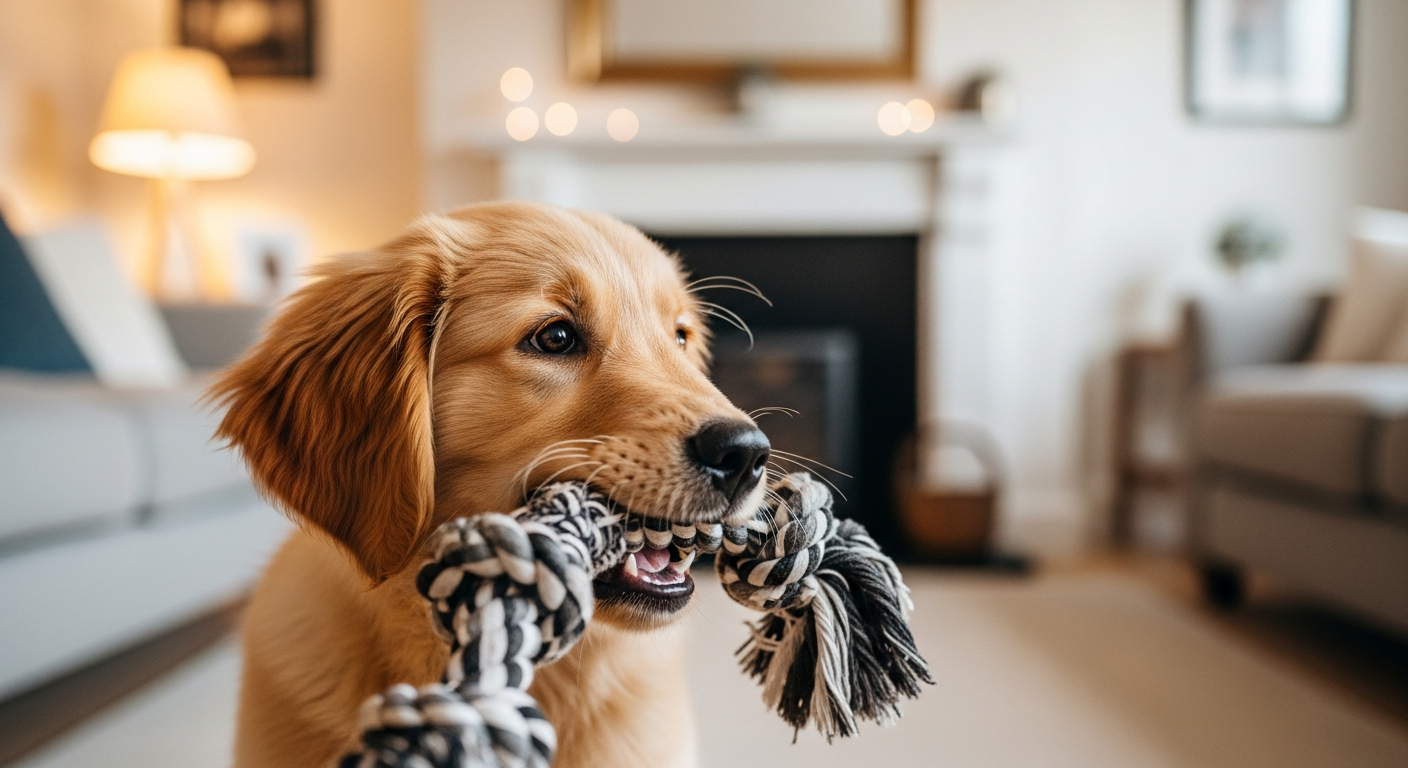
Provide plenty of safe chewies and stuffables, including chew toys and natural chews. Rope toys, soft toys, rubber toys, Kong's stuffed with food. Look for natural chews and avoid plastic chews and rawhides. Kongs are generally the safer option to be left with.
Redirect
When they mouth you, redirect them on to something more appropriate such as a toy or chew. Try and avoid touching them unless they have something in their mouth and don't expect a hands-on relationship until they are older.
Arousal Causes Biting
After any exciting activity such as training, playing, or exploring, provide them with chew time to help calm them back down. Over arousal is the second most common reason for puppy biting.
Puppy Proof Clothing
Avoid wearing any clothes that may be tempting to the puppy such as floaty long skirts or sleeves, dressing gown ties, fluffy slippers etc. Leggings, thick joggers and soft shell material tends to be the best choice.
Remove Temptation
Puppies will chew anything. Make sure your house is properly puppy proofed and you remove any temptation, or block off furniture. Bitter apple spray can deter some puppies but not all.
Confinement Areas
Utilise metal puppy pens and crates to give your puppy a safe confinement area for when you can't properly supervise them. Trust me...you will need it for your sanity and theirs.
Hands Are A No Go
From day one, teach your puppy that hands are not for biting. If your puppy bites your hands, tuck them under your armpit. Don't accept gentle biting, no hands approach is best.
Engage Their Brain
Puppies can bite due to boredom and attention seeking. Make sure you are providing lots of enrichment for them using food puzzles, sniffing and training.
Evening Demons
Puppy biting is usually at its peak in the evening. Be prepared with frozen Kongs, brain games or your book of trick training, to help tire those crazy brains out.
Training
Train your puppy a strong leave it cue, or a drop it cue for when they get hold of your hands or clothing. Always ensure you have treats or a toy in your pocket to redirect your puppy onto.
Frozen Treats
Frozen treats can help with the teething. Try freezing a food Kong, cooked carrot or a damp face cloth for your puppy to find relief from the pain of teething.
Sleep... And More Sleep
Like children, puppies don't always sleep when they are tired, especially if there is a lot of excitement going on around them. Being overtired is the number one reason why your puppy will bite more.
Leanne's Secret to Success
"The best thing I did for my puppy was providing her with a chew basket. It was full of long-lasting natural chews like hooves, split antlers, wood chews, yak bars, and horns. Anytime she started to chew, I would redirect her to the basket. She quickly learnt how to take herself there and pick a chew whenever she wanted to gnaw on something!"
"I also made sure she had dedicated chew time every day — sitting down together with a natural chew like cows' ears, rabbits' ears, or pizzle sticks. Not only does it keep them busy and satisfy that urge to gnaw, but it's actually really calming for them too. It's become one of our favourite parts of the day!"
"I also gave her plenty of outlets for her biting and chewing — whether that was tug toys or giving her a piece of cardboard she could absolutely go to town on. I would praise her whenever she put her mouth on something suitable, and give her a gentle 'no' or 'ah' whenever she went for something she shouldn't. The key is giving them somewhere to put that energy, not just telling them off for having it!"
My No.1 Tip To Tackling Teething
We make the mistake of buying lots of toys for our puppy and we give them all the toys at once. When we then try to redirect them onto a toy that they've had access to all day, your sleeves and hands are much more fun.
Like kids with their toys, once they've played with them, the novelty wears off. Rotate your puppies toys on a regular basis and save a couple of special toys that only come out when you need to redirect your puppy from biting.
My absolute go to toy and a must for all puppy parents is the sheepskin chaser toy from Tug-E-Nuff. They are absolutely amazing. You can also get pocket toys and I'd recommend having at least one of them on you at all times, to be able to whip out when needed.
Remember... these toys are special and should remain that way. Don't let your puppy get bored by playing with them all of the time.
What NOT To Do
- ✕Physically or verbally punish your puppy. A tap on the nose can be just as painful as a bee sting. Remember, puppy biting is natural. You wouldn't punish a child when they are teething. NEVER punish your puppy for biting and NEVER tap them on the nose.
- ✕Push your puppy away. This can entice your puppy into a game.
- ✕Yelp and scream. This will only cause your puppy to become more excited.
When Should You Worry?
Puppies generally don't bite out of aggression, but these are the signs to look for when play is no longer play:
- Growling, snapping, or biting when a person comes near a resource (food, toys, etc).
- Stiff and tense body with a hard stare.
- Growling or lip curling with tense body and stare (different to play).
- Short sharp bite.
Please be aware: It's normal for puppies to growl when play biting, it's common for them to draw blood with their sharp teeth and whilst it may appear to be aggressive, most of the time it's not. If you suspect your puppy is showing aggression, please contact a trainer or behaviourist immediately.
Playtime: How to Keep it Fun (and Teeth-Free)
Play is vital, but it needs boundaries. Here is exactly how I play with my own dogs to prevent biting.
The "Bite = Game Over" Rule
When I play with my puppy, everything is fun—I verbalise and praise them constantly. But the moment she puts teeth on me, I stop all play immediately. I say a calm "no biting", walk away for 30 seconds, then rinse and repeat. It's the most effective way to teach bite inhibition.
Teaching Self-Regulation
I teach my puppies how to regulate themselves by playing "Stop-Start". We'll have a short moment of rougher play, then I'll remove the toy/play, wait for them to find their calm, and only then start the game again. This builds the "off switch" every puppy needs.
Busting the Biting Myths
"Pin them down to show dominance."
Please don't. This just scares your puppy and destroys the trust you're trying to build. Dominance theory is outdated and scientifically debunked. It often leads to fear-based aggression later in life.
"Squealing like a puppy makes them stop."
For many puppies (especially high-drive breeds in Solihull!), this high-pitched noise just sounds like a squeaky toy. It often makes them bite harder and get more excited.
Further Reading & Related Topics
Still struggling with your Landshark?
You don't have to do this alone. My Puppy Club helps Solihull owners navigate the biting phase and build a calm, confident dog through expert coaching and support.
Book a free call and let's chat